Search
The Pander – Lublinski family consisted of mother, father, and daughter. No one of the family survived Auschwitz-Birkenau.
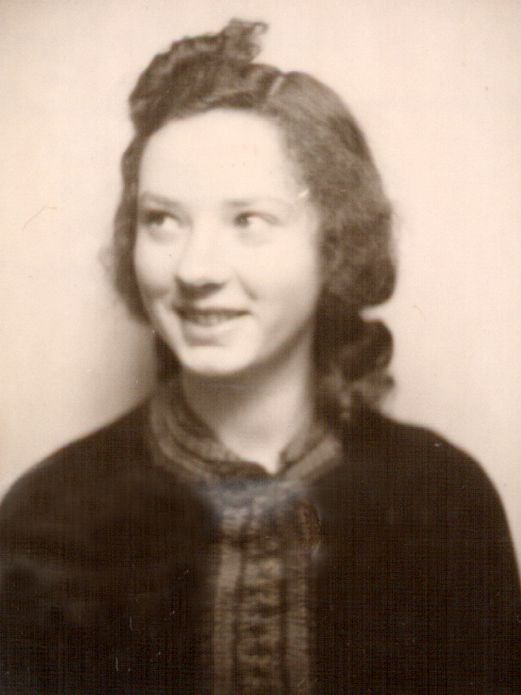
The Pander – Lublinski family consisted of mother, father, and daughter. The father, Martin Pander, was born on April 9, 1894 in Buk (Poland) and was a watchmaker. The mother, Martha Lublinski was born on October 15, 1899 in Hamborn (Germany) and was a housewife. As a married couple, they lived in Dortmund (Germany) where they had their first and only child. Their daughter, Senta Ursula Pander, was born on December 7, 1925 and later worked as a modiste.
As political refugees, Martin and Martha arrived in Belgium from Dortmund on April 1, 1939. They chose this escape route because Belgium was the nearest country. They entered the country in April via Aachen and continued towards our capital Brussels. Their arrival was confirmed by registration in Saint-Gilles on June 26, 1939. There they lived at Guldenvliesstraat 131. At that time, their daughter was still in the Netherlands, more specifically in Den Helder, where she ended up on the children’s transport. In order to get Senta back with them, Martin and Martha made an application. This with success! They succeeded in obtaining a three-month visa for Senta. After three months she was not sent away, on the contrary, she kept on obtaining an extension to stay in Belgium. The parents, Martin and Martha, were registered in the aliens’ register with the model B on November 30, 1939.
In May 1940, Nazi Germany invaded Belgium. Mother Martha and daughter Senta obeyed the anti-Jewish laws of the occupation administration. At the end of 1940 they registered in the municipal Register of Jews, and in 1942 they became members of the Jewish Association. When the “evacuation” of the Jews began in August 1942, both Martha and her daughter Senta were sent on transport I. They, along with 424 other women were placed on a train bound for Auschwitz. Including 573 men, the deportation transport totaled 999 people. Martha and Senta, like 819 of these 999 Jews, accepted the Arbeitseinsatzbefehl, the employment order issued by the Sipo-SD. As “obligated workers”, they were summoned to the Mechelen assembly camp to be deported thereafter. Upon arrival at the Dossin Barracks they received an identity plate with the number of the transport in Roman numerals (I) and in Arabic numerals their personal transport number. Senta had number 98 and Martha the number 99. From then on they had no other identity.
Most of the deportees of transport I got off near Auschwitz in an open field where they were selected to work in the camp complex. The immediate extermination rate of this transport, of which 74.4 percent were put to work, was the lowest of all the deportations from Mechelen. Martha Lublinski can be found in the Sterbebücher of Auschwitz, which are incomplete, showing that she was selected for labour. Her daughter Senta was barely 16 at the time and is not found in the Sterbebücher. It is possible that she was immediately gassed in one of the two Bunkers at Birkenau. Martha also died in Auschwitz, as did 99.3 percent of the deportees of this transport. Only seven individuals survived three years of captivity.
Martin Pander, the father, was not deported to Auschwitz via the Dossin Barracks but did end up there. He was sent to Auschwitz in August 1942 from Drancy in France with convoy 17. Like his wife and daughter, he was murdered. No one of the family survived.
ADRIAENS Ward, STEINBERG Maxime (et al.), Mecheln-Auschwitz, 1942-1944. The destruction of Jews and gypsies from Belgium, 4 volumes (part 1), Brussels, 2009.