Search
As a Jewish Belgian, this man from Liège followed a dangerous and unusual path. After leaving the Dossin barracks due to his mixed marriage, he devoted himself to the resistance. This led to a second arrest with unusual consequences: no racial deportation via Mechelen, but transport as political prisoner from the prison in Saint-Gilles.
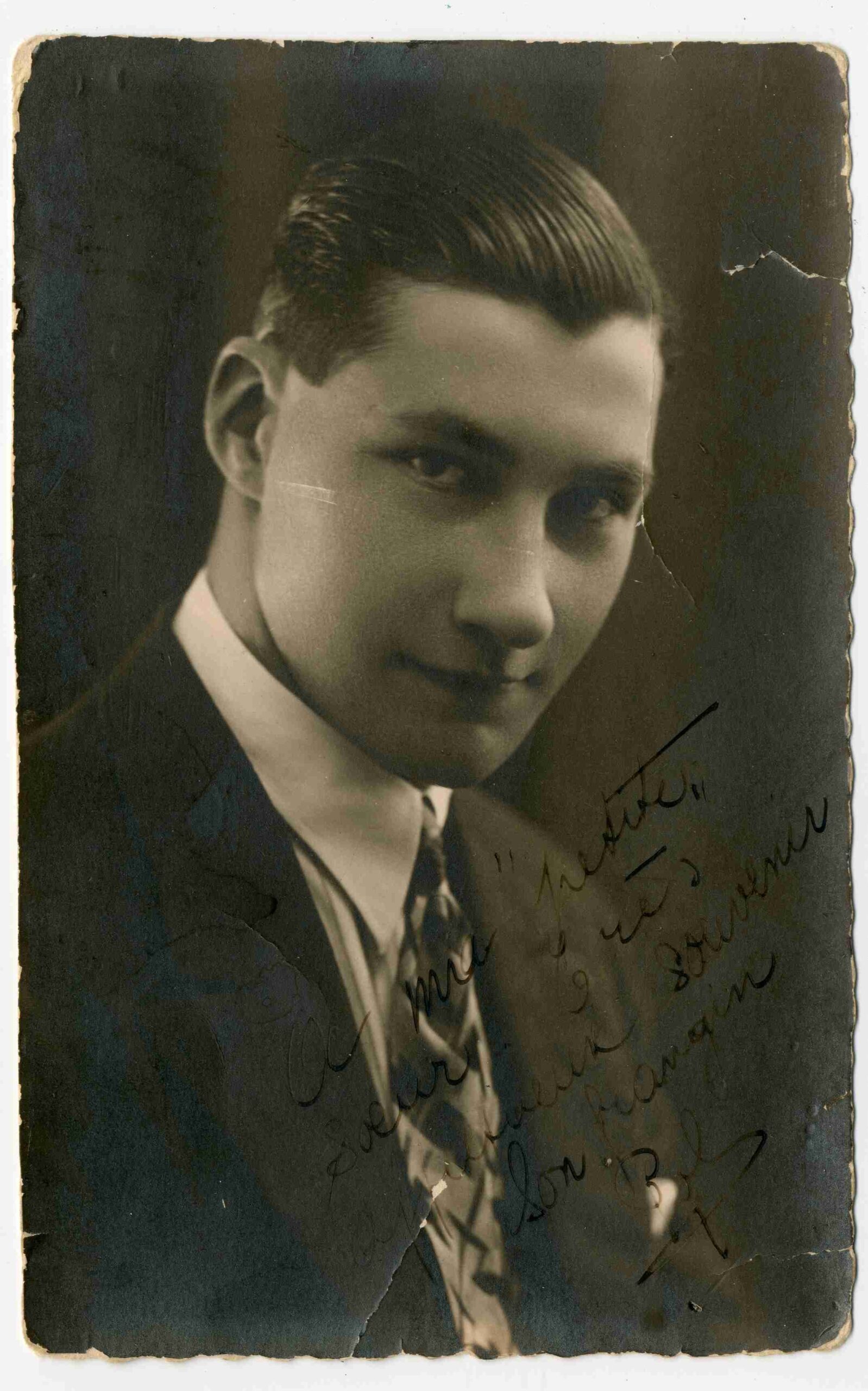
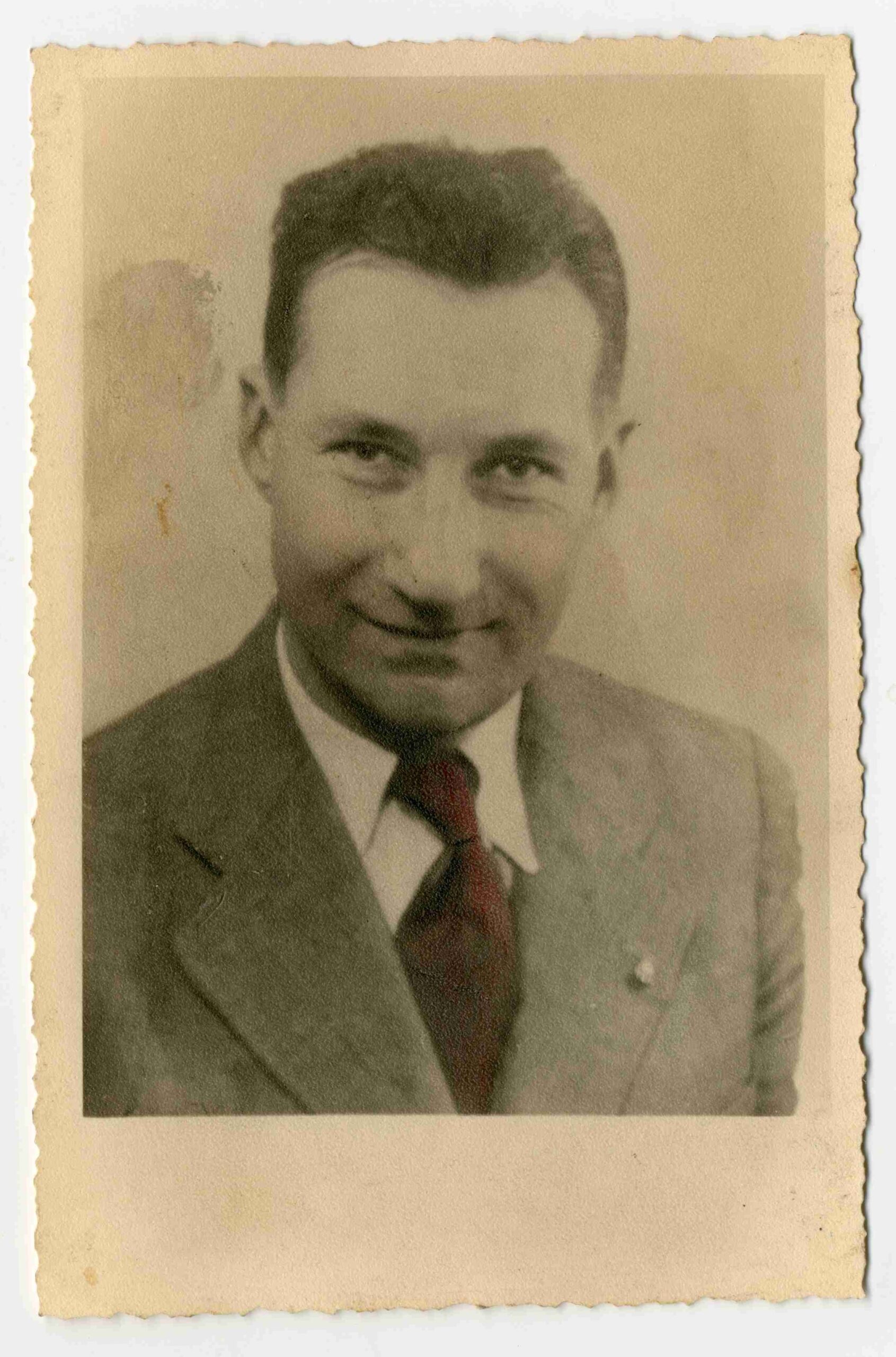
Leopold Hertogs is born on 8 July 1909 in Liège, the son of Bernard Hertogs (aged 34), a man who made his life in Belgium but whose roots lie in Gulpen, the Netherlands, and Henriette Levison (aged 26). He also has one sister, Nelly (aged 3). At 20 Rue d’Harscamp, which serves as both home and place of business, Leopold’s father works as a wholesaler in haberdashery for men’s clothing. Already at a young age, Leopold loses his mother and has to grow up without her.
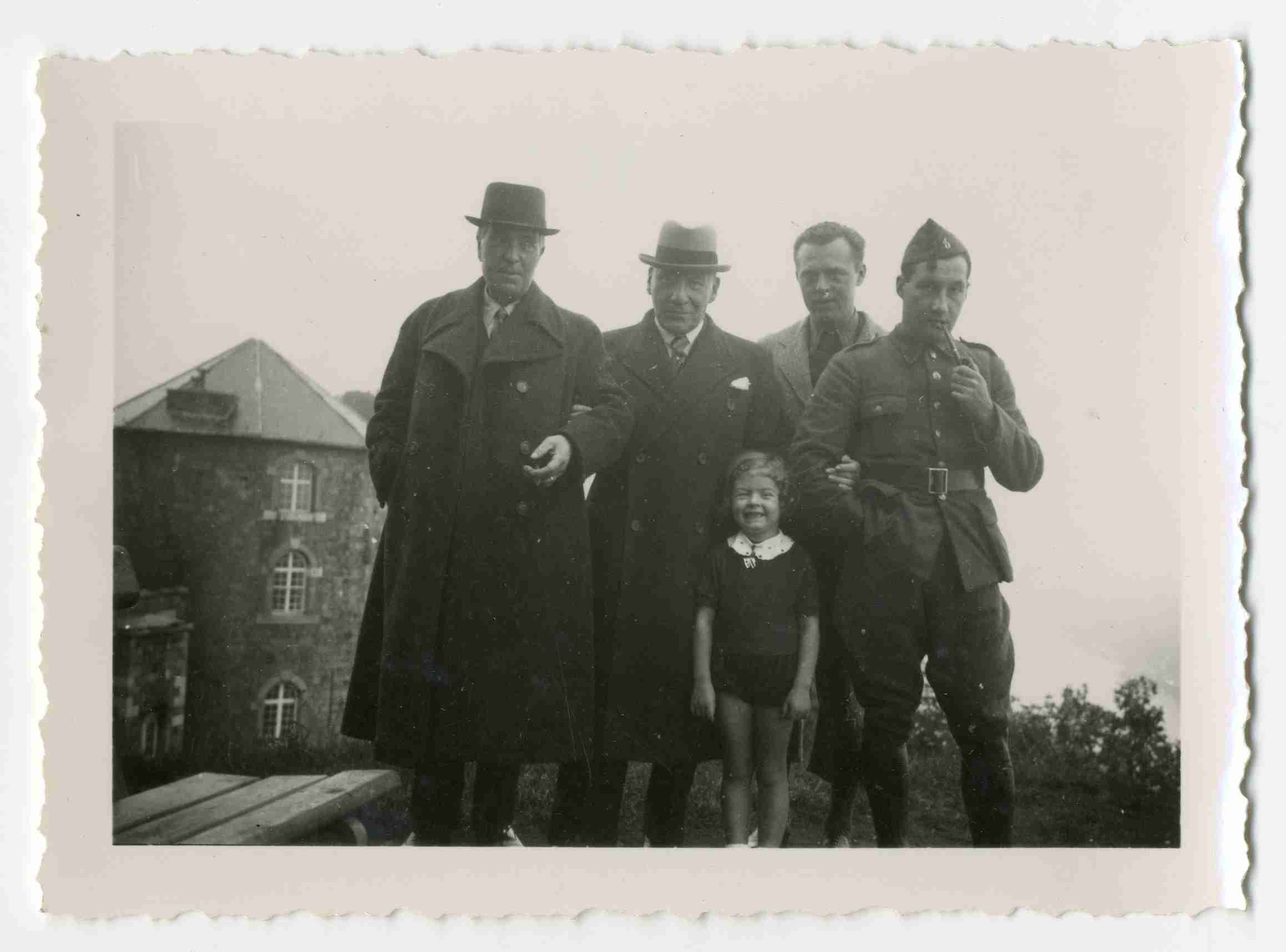
As a teenager, Leopold resolutely chooses Belgium. At the age of sixteen, he acquires Belgian nationality. As a result, in 1939 he is called up from his father’s business and mobilised into the Belgian army. During the German invasion of Belgium in May 1940, he helps defend the country as a sergeant in the 5th Artillery Regiment at the Namur Fortified Position, at the heart of the fierce defence against the advancing German troops. As the occupation progresses, the occupying forces issue an ever-increasing number of decrees. Both Leopold and his father Bernard are required to register as members of the Association of Jews in Belgium in 1942.
On 26 May 1943, Leopold and his father are in Brussels on business. Bernard owns a warehouse there at 71 Stoofstraat. They have arranged to meet a business associate from Liège, Michel Donnay, to return to Liège together. But as father and son are walking along Place Fontainas, they are suddenly approached by members of the Sicherheitspolizei-Sicherheitsdienst (Sipo-SD) in plain clothes, assisted by a Jewish informer who points them out. Both are arrested, taken to the Sipo-SD headquarters on Louizalaan, and subsequently transferred to the Dossin barracks in Mechelen, where Leopold and Bernard are interned on 27 May 1943.
At that time, Leopold’s family situation also plays a decisive role. He has been married to a non-Jewish woman, Denise Simonis (born in 1916), since 7 December 1940, meaning that under Nazi racial legislation his marriage is regarded as a Mischehe (mixed marriage). On 9 July 1943, Leopold is released from the Dossin barracks, an exception resulting from the way in which German policy on mixed marriages is applied at that time: at this stage of the occupation, such a marriage offers him protection against deportation.
Bernard (aged 68) remains in Mechelen for longer, until 16 September 1943. He is not fully released, but is transferred, along with a few other elderly Jews, to the Jewish retirement home in Scheut, partly because the occupying forces wish to free up space in the Dossin barracks for those arrested in the round-ups. In Scheut, he describes life as a state of partial freedom: residents are allowed to move outside the home, but only within a limited radius, and are issued with passes because they no longer have their identity cards. The home is under strict German control. Bernard remains there until 10 February 1944, after which he is released and returns home.
After his release from the Dossin barracks, Leopold chooses not to lead a secluded life. He joins the Belgian Resistance, specifically the Armée de la Libération (Army of Liberation) and the Union des Agents Communaux Liégeois de la Résistance, two organisations that coordinate resistance activities in the Liège region. His work involves considerable risks, but is vital for others: he provides blank or forged identity papers for those being persecuted, helps Belgians obtain false papers to escape compulsory labour in Germany, and distributes stolen or forged ration stamps among Jews, resistance fighters and those in hiding, so that they can obtain food and other necessities.
Leopold’s resistance activities cost him a second arrest. On 18 March 1944, he is arrested at his home at 20 Rue d’Harscamp in Liège by the Sipo-SD. Unlike in 1943, this does not result in his transfer to the Dossin barracks. Leopold is transferred to the military prison in the Fort of Huy (French: Citadelle de Huy), where his wife Denise is still allowed to send him parcels, although she is not permitted to visit him. He is then transferred to Saint-Gilles prison in Brussels, where he is detained from 27 April to 22 June 1944.
On 23 June 1944, Leopold Hertogs is deported. In a note he manages to throw from the departing train, he writes that he believes he is being taken to Bonn (Germany), where he will be reunited with his ‘comrades-in-arms’ (anciens compagnons d’armes). In reality, he passes through at least three German prisons before arriving at Auschwitz concentration camp, as testified by his fellow prisoner from Liège, Léon (Moses Leo) Wygocki. Upon arrival at Auschwitz, Leopold is given the tattoo number 189559 and is assigned to forced labour.
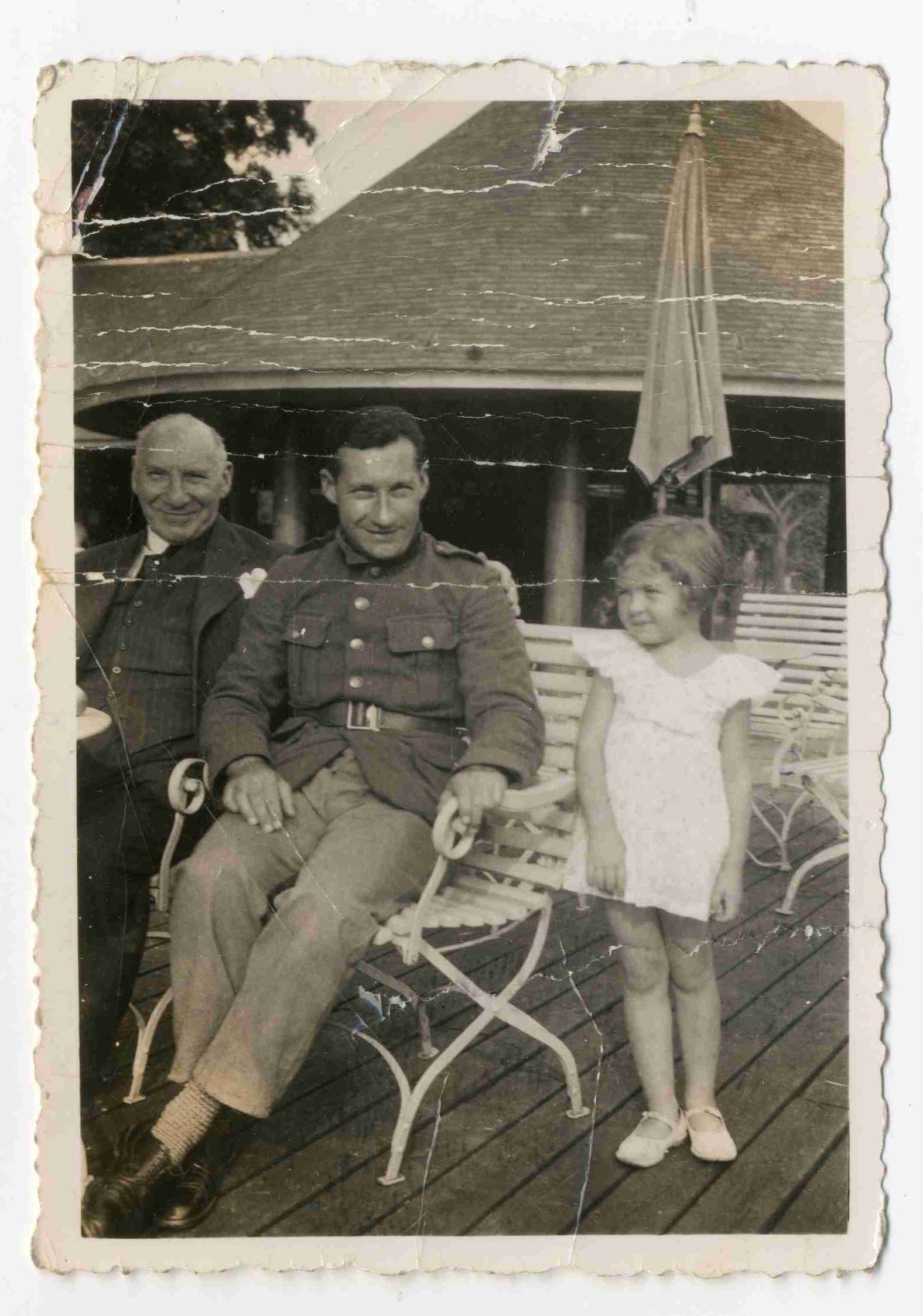
Meanwhile, his father Bernard remains vulnerable to persecution. On the night of 4 July 1944, he is arrested again in Liège by the Sipo-SD and, after several hours in custody, transferred to the Fort of Huy. Three weeks later, he spends a short period at the Dossin barracks, from 27 to 29 July 1944. Instead of being deported, Bernard, now 69 years old, is once again sent under Sipo-SD supervision to the Jewish home in Scheut, where he is formally under German control but is, for the time being, spared from transport to a camp.
Bernard remains in Scheut until 29 August 1944. Shortly before the arrival of the Allies, he leaves the home, fearing that the Germans will take him away, and deliberately leaves no address behind. He goes into hiding for a few days with the Thys family, entrepreneurs in Linkebeek near Brussels, and only dares to show himself in public again after the liberation. At that point, he does not yet know what has happened to his son.
In September 1944, following an injury, Leopold is admitted to the Häftlingskrankenbau (HKB) at Auschwitz, the infirmary for prisoners too weak or too ill to work. Conditions there are extremely precarious, with virtually no medical care and constant selections for execution. Yet Leopold persists. He remains in Auschwitz until January 1945, as the Red Army approaches. The camp is evacuated and Leopold is forced to join the infamous death marches through snow and freezing cold. On 25 January, he arrives at the Mauthausen concentration camp (Austria), where he is given prisoner number 119842. From Mauthausen, Leopold is transferred to the nearby subcamp at Gusen, where his health completely collapses. On 1 March 1945, Leopold is transferred to the Sanitätslager (the infirmary) at Mauthausen. There, Leopold spends his final days. On 6 March 1945, just a few weeks before the camp’s liberation by American troops, Leopold Hertogs is pronounced deceased. Officially, he died of septicaemia (blood poisoning) and erysipelas (a wound-related skin infection), diagnoses often used in camp records to cover up deaths caused by systematic neglect, starvation and abuse.
The aftermath of Leopold’s deportation affects Denise deeply. At the time of his arrest, she is pregnant and already unwell; only later does it become clear that she is suffering from tuberculosis. On 10 August 1944, their daughter Marthe Hertogs is born, but Leopold never gets to see her. In the months that ensue, Denise writes desperately to humanitarian organisations and tracing services to inform them that he has a daughter, asking that her poor health not be mentioned, so as not to worry him. The news of his death reaches her via a brief notice in the newspaper La Libre Belgique, which drives her to despair and further undermines her fragile health. By 1946, Denise is exhausted, both physically and emotionally. She raises Marthe on her own, trains as a hairdresser so she can provide for them, and remarries in 1952 to Paul Gabriel from Middelkerke, in the hope of building a stable future for Marthe.
After the war, Leopold’s father Bernard also attempts to rebuild his life. In 1944, he remarries Léonie (Leontine) Vergote in Liège, only to pass away in 1950, a few years after the persecution, the war and the loss of his son.
BRUSSELS, CegeSoma, Archives of the Association of Jews in Belgium, [KD_00009_0406_010605], Membership card of Bernard Hertogs, 30 March, 1942.
BRUSSELS, CegeSoma, Archives of the Association of Jews in Belgium, [KD_00009_0406_010606], Membership card of Leopold Hertogs, 30 March, 1942.
BRUSSELS, State Archives, Archives of the Public Centre for Social Welfare (CPAS) of Anderlecht, Registries of the Jewish retirement home Scheut (1943-1944).
BRUSSELS, State Archives, Archives of the Public Security. Aliens Police: individual files, no. 798363, File of Bernard Hertogs.
BRUSSELS, State Archives, Service Archives for War Victims, no. AOS-AVG d058084, File of Leopold Hertogs.
BRUSSELS, State Archives, Service Archives for War Victims, no. AOS-AVG PP 161194/23910, Application file for the status of Political Prisoner of Bernard Hertogs.
BRUSSELS, State Archives, Service Archives for War Victims, no. AOS-AVG PPAD 43104/736, Application file for the status of Political Prisoner of Leopold Hertogs.
BRUSSELS, State Archives, Service Archives for War Victims, no. AOS-AVG-SD 113797, File of Bernard Hertogs (Persecution of Jews file).
MECHELEN, Kazerne Dossin, Vereeniging der Joden in België – Association des Juifs en Belgique. Institut Martin Buber, [KD_00010_A010175], Letter from Bernard Hertogs to Mr. Van Damme concerning the intervention for Leopold Hertogs, 18 March, 1944.